In today's digital age, display screens have become essential gateways connecting us to the world. From daily office work and entertainment to creative design and smart device interactions, premium-quality displays significantly enhance user experience. As consumer demands grow increasingly diverse, traditional standardized screens struggle to meet individualized needs, giving rise to Industrial-Grade Display solutions that deliver unprecedented personalized visual experiences. Refering to display devices designed for ordinary individual users or family scenarios, supporting daily entertainment, office work, and study.
What is a Industrial-Grade Display ?
Industrial-grade displays are engineered to operate in environments far harsher than typical living or office conditions. Unlike standard screens, an industrial-grade display must withstand dust, wind, direct sunlight, rain, sudden temperature drops, extreme heat, and physical obstructions. Because of these demanding operating environments, every industrial-grade display is built to be rugged, durable, and highly reliable. Whether under scorching heat or pouring rain, an industrial-grade display delivers consistent, normal performance. These industrial-grade display solutions are increasingly common in daily life and come in various types. While the price of an industrial-grade display is generally higher than that of ordinary monitors, many users remain unaware of the key differences between an industrial-grade display and standard computer screens. The uses of mobile phones, computers, and TVs are well known, but the unique value of the industrial-grade display in specialized fields still needs broader recognition.
Features of industrial display screens
Industrial-Grade Display solutions are fundamentally different from consumer monitors in several key aspects, spanning materials, temperature tolerance, supply lifecycle, brightness, stability, and contrast.
Materials & Enclosure: An Industrial-Grade Display typically features an all-steel design, using ordinary steel plates, stainless steel, or aluminum. This construction ensures shock and impact resistance. The housing is metal, and internal board lines follow industrial design principles to resist aging. Protection levels for an Industrial-Grade Display can reach IP68 (dustproof level 6, waterproof level 8). In contrast, ordinary monitors use plastic shells with weak radiation suppression and poor anti-interference. For high-temperature environments, an Industrial-Grade Display with a wide temperature range (-40°C to 85°C) is recommended—though only a few major foreign manufacturers produce such units, making them costly.
Working Temperature: A true Industrial-Grade Display generally operates from -20°C to 60°C, with some specialized variants reaching -30°C to +80°C. Consumer LCD displays only require a 0°C to +50°C range, suitable for constant indoor temperatures.
Supply Cycle: The lifecycle of an Industrial-Grade Display is typically around 10 years (with IC and glass in normal supply), allowing customer equipment to continue with little or no modification. Consumer monitors, like smartphones, update rapidly—often discontinued within months. Hence, the Industrial-Grade Display offers far longer-term availability.
Stability: Industrial-Grade Display units provide excellent reliability, low failure rates, and long service life, requiring rigorous testing for voltage, current, humidity, and extreme temperatures. They support 24/365 uninterrupted operation. For example, a TV may age after 8 hours in high heat/humidity, while an Industrial-Grade Display withstands 24 hours. Such displays are used in industrial automation, medical, and military sectors, employing impact-resistant designs.
Contrast: An Industrial-Grade Display often needs high contrast (e.g., 450:1 for 10.4", 12.1", or 15" models) because users cannot guarantee optimal distance or lighting.
Display Brightness (Nits): Industrial LCD brightness typically ranges 300–1000 nits, balancing clarity and eye comfort under complex light conditions. Consumer displays remain at 250–300 nits, insufficient for industrial environments where ambient light easily exceeds backlight brightness.
What is the difference between industrial-grade display and consumer-grade displays?
project | Industrial display | Ordinary display |
shell material | Generally made of all steel, industrial design, not easy to age | Generally, plastic casings are used |
Operating temperature | General working temperature can be -20~60℃ | 0℃~+50℃ |
Delivery cycle | Long cycle, usually 10 years | short. Fast update cycle |
brightness | At least 450cd/m2 | Brightness is only 250-300cd/m2 |
stability | Good: pressure resistance, current resistance, humidity resistance, high and low temperature resistance, earthquake resistance, radiation resistance | Difference |
Contrast | High, good environmental adaptability | Low, poor environmental adaptability |
Display brightness | Brightness parameters usually range from 300 to 1000 nits | The brightness is about 250~300cd/m2 (nits) |
In which consumer electronics products can industrial-grade displays be applied?
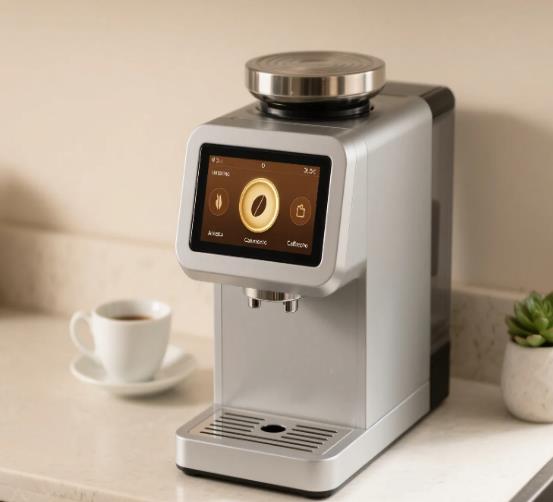
In a boutique coffee shop or home coffee corner, a custom consumer display can serve as the "smart control hub" for the coffee machine. The commercial model can choose a 5-7 inch TFT LCD display with touch panel to display more menu options, while the home model can choose a 2.4-4.3 inch touch screen with a simple interface.
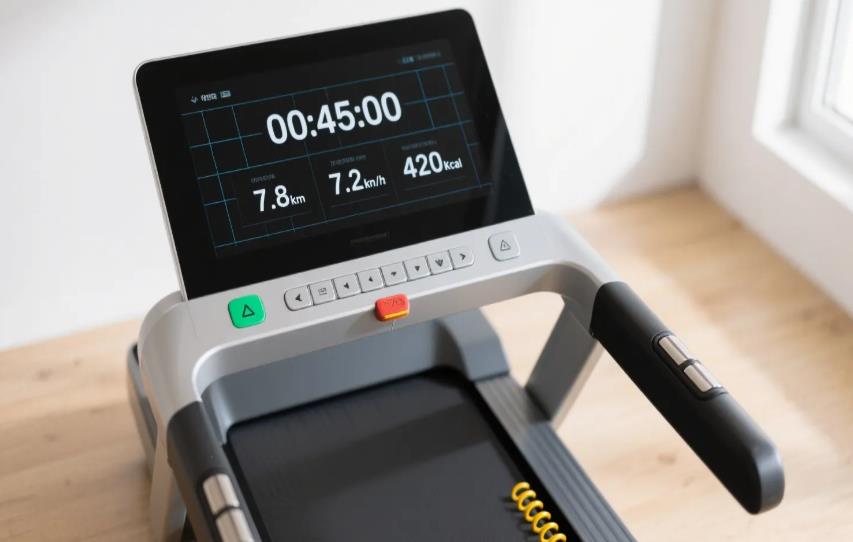
An increasing number of treadmills now come equipped with smart color screens, where an industrial-grade display serves as both a "fitness data manager" and an "entertainment companion." This industrial-grade display is designed to withstand prolonged operation, vibration, and temperature fluctuations common in gym environments. The customizable 10.1-inch industrial-grade display integrates into the treadmill console, featuring split-screen functionality. The left side of the industrial-grade display shows real-time core metrics like running speed, distance, time, calories burned, and heart rate, while the right side plays instructional videos (such as coach-led interval training or hill-climbing sessions). Users can adjust workout intensity in sync with video rhythms. Additionally, this industrial-grade display connects to gym membership platforms, automatically synchronizing exercise records and generating personalized fitness reports. With its superior reliability and longevity, the industrial-grade display ensures consistent performance even during intensive daily use.
When the user activates the electric toothbrush, the industrial-grade display instantly shows brushing modes such as Clean, Whitening, and Sensitive, allowing users to verify if their selected mode aligns with daily oral care needs. The system provides real-time feedback: upon completion of brushing, the industrial-grade display generates a report and sends it to the phone. The battery level is shown in real-time using a percentage format for visual clarity. Additionally, a brush head replacement reminder is activated based on usage duration or frequency, with the industrial-grade display showing the prompt: "Brush head is about to expire – please replace promptly."
The customizable size of this industrial-grade display typically ranges from 0.96 to 1.5 inches. A common resolution of 80×160 meets basic icon, number, and text display needs, ensuring that brushing mode icons, brushing time, and power percentage appear clearly and sharply on the industrial-grade display for easy user identification. With its rugged reliability and consistent performance, the industrial-grade display proves ideal for demanding consumer product environments where clarity and durability are essential.

What customized Industrial-Grade Display services can we offer for your consumer electronics products?
Leveraging an Industrial-Grade Display means prioritizing durability, reliability, and long-term performance. Unlike standard screens, an Industrial-Grade Display is engineered to withstand extended use, variable environments, and demanding interaction patterns. Below is how our Industrial-Grade Display customization empowers your products.
Size Customization: Tailored to Meet Specific Consumer Scenarios
We offer flexible size options—from 0.96-inch screens for smart wearables and 2.4-inch displays for Bluetooth speakers, to 10.1-inch tablets and 15.6-inch portable monitors. Every Industrial-Grade Display size is customizable to ensure a perfect fit with your device's physical design.
Panel Customization: Choose from TN, VA, or IPS—Precisely Matched to Your Application Needs
Consumer devices have varying performance requirements. Our Industrial-Grade Display solutions specialize in TN, VA, and IPS panels, rejecting one-size-fits-all generic options.
TN Panels: High response speed (1–5ms) ideal for handheld gaming consoles and compact monitors. An Industrial-Grade Display with TN technology offers cost-effective, rapid interaction.
VA Panels: High contrast (3000:1+) delivering deep blacks and natural colors—perfect for smart TVs and HD photo frames where an Industrial-Grade Display enhances home entertainment.
IPS Panels: Wide viewing angles (178°) and color accuracy, ideal for tablets, office monitors, and smart vanity mirrors. An Industrial-Grade Display with IPS ensures consistent visuals from any angle.
Customized Wiring Harnesses: Tailored to Internal Device Structures
Our Industrial-Grade Display includes precise interface matching (SPI, 8080, eDP, LVDS), adaptive cable lengths (5cm–100cm), and bending angles. Using high-resilience materials, each Industrial-Grade Display wiring solution prioritizes stability and durability, with optional shielding layers to prevent signal interference.
Personalized Brightness Customization: Adjusting Brightness to the Scene
Our Industrial-Grade Display supports a comprehensive brightness range: 200–500 cd/m2 for indoor use, 800–1200 cd/m2 for outdoor high-light environments, and below 50 cd/m2 for low-light scenarios. We also offer automatic brightness adjustment via built-in light sensors, making every Industrial-Grade Display adaptive, comfortable, and user-friendly.
From compact home screens to portable monitors, and spanning applications from everyday use to professional environments, our exceptional industrial-grade display customization capabilities make the concept of "a screen exclusively tailored for your device" a reality. If you have specific product requirements—such as panel dimensions, device interface types, or target application scenarios—we invite you to contact us at any time. We will promptly formulate a customized solution for you, helping your product stand out from the crowd with a unique competitive edge!







 Search